Echoes of the Past

The Great Molasses Flood of 1919

Scroll down

Historical Photographs
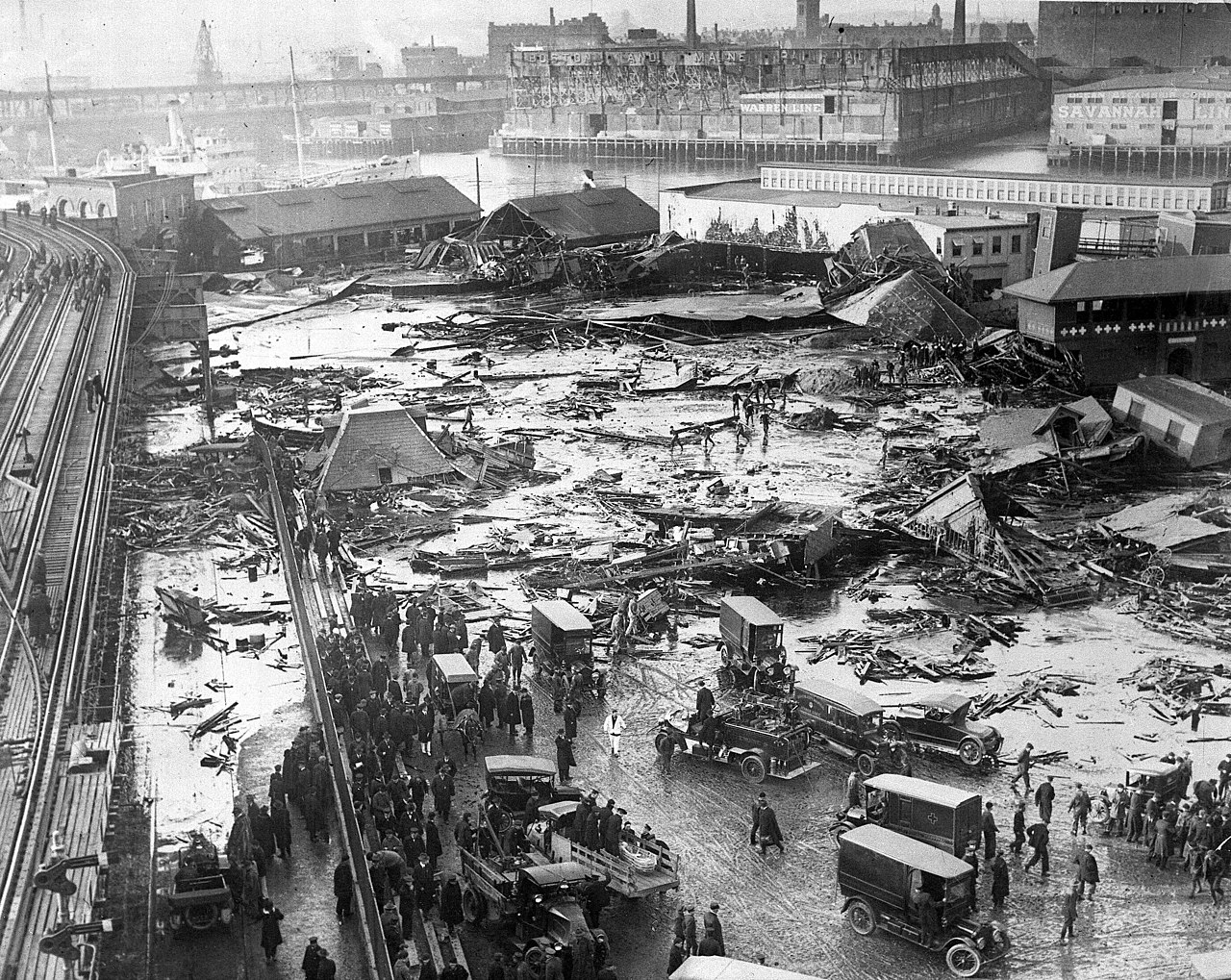
Aftermath of the Great Molasses Flood showing damaged buildings and rescue workers

Disaster Aftermath

Rescue workers navigate through the devastation caused by the molasses flood, showcasing the extensive damage to buildings in Boston's North End.

Historical photo of Boston's North End during the cleanup efforts

Recovery Efforts

The massive cleanup operation that followed the disaster, showing the resilience of Boston's community in the face of this unprecedented catastrophe.

The Disaster That Shook Boston

On January 15, 1919, one of the most unusual disasters in American history occurred in Boston's North End. A massive tank containing 2.3 million gallons of molasses collapsed, sending a wave of sticky destruction through the streets at an estimated 35 mph.

The event resulted in 21 deaths and 150 injuries, causing widespread damage to buildings and infrastructure. This tragic incident led to significant changes in construction regulations and corporate accountability.

Key Figures

Stephen Puleo

Author of "Dark Tide: The Great Boston Molasses Flood of 1919" who brought this historical event to modern attention through his detailed research and compelling narrative.

Arthur Jell

The treasurer of United States Industrial Alcohol, which owned the tank. He played a crucial role in the subsequent investigation and legal proceedings.

Hugh Ogden

The Massachusetts Superior Court auditor who presided over the civil proceedings and ultimately found USIA responsible for the disaster.

Timeline of Events

1915

Tank Construction

The 50-foot-tall steel tank was constructed to hold molasses for industrial alcohol production.

Jan 15, 1919

The Disaster

At approximately 12:30 PM, the tank collapsed, releasing a massive wave of molasses.

1925

Legal Resolution

After six years of hearings, USIA was found responsible and ordered to pay damages.

Lasting Impact

Legal Changes

  • Stricter building codes implemented
  • Requirements for architect and engineer approval
  • Regular safety inspections mandated

Social Impact

  • Increased focus on industrial safety
  • Greater corporate accountability
  • Changed Boston's North End forever

Fascinating Facts

The Sticky Aftermath

The cleanup took weeks, and the smell of molasses lingered in the area for months. Local residents claimed they could smell molasses on hot summer days for years afterward.

The Science Behind It

Recent studies suggest that the cold temperature that day made the molasses more viscous, which increased its destructive power as it flowed through the streets.